Semantic Search: Deciphering Intent in the Age of Vector Embeddings
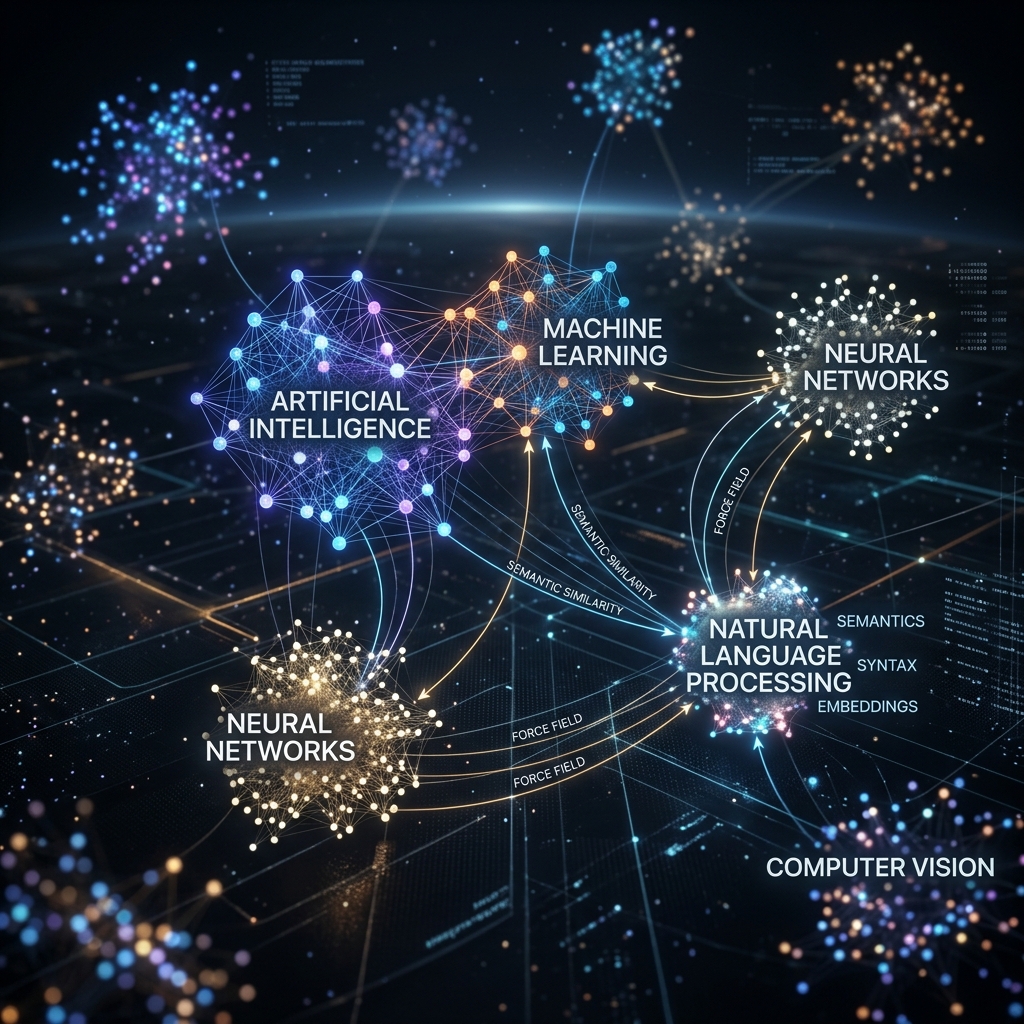
Semantic Search: The Shift from Strings to Things
For decades, search engines relied on lexical matching — looking for exact character sequences across a database. Today, the paradigm has shifted to semantic search, where the goal is to understand the underlying intent and contextual meaning of a query.
The Role of Vector Embeddings
At the heart of semantic search lies the concept of vector embeddings. Through a process called "embedding," natural language text is converted into high-dimensional mathematical vectors. In this vector space, words and phrases with similar meanings are positioned closer together, regardless of whether they share common keywords.
For instance, a semantic search engine understands that "automotive repair" and "car maintenance" are conceptually nearly identical, even though they share zero words.
Why Semantic Search Matters for LSO
In the context of Large Language Model Search Optimization (LSO), semantic relevance is the primary currency. LLMs generate answers based on the semantic proximity of information retrieved from their training data or external sources (RAG).
- Contextual Anchoring: By surrounding your core value propositions with semantically related terminology, you "anchor" your brand within specific conceptual clusters in the model's latent space.
- Intent Matching: Content that addresses the "why" and "how" of a user's problem is more likely to be retrieved by a semantic engine than content that simply repeats a product name.
Optimizing for Semantic Engines
To excel in a semantic environment, your content strategy should focus on:
- Topic Clusters: Instead of targeting isolated keywords, build comprehensive resource hubs that cover a topic from multiple angles.
- Natural Language Clarity: Avoid technical jargon that isn't semantically linked to the core problem you solve.
- Rich Contextual Metadata: Use JSON-LD to explicitly define the relationships between different concepts on your site.
Conclusion
Semantic search is the technological foundation upon which generative AI is built. By understanding how vector embeddings and intent matching work, businesses can create content that isn't just "findable," but "understandable" by the world's most advanced search systems.
Related articles



Ready to optimize your AI visibility?
Get your free AI audit score and see how ChatGPT, Claude, and Perplexity currently see your business.
Scan your website free