Knowledge Graphs: An Introduction for Business Leaders
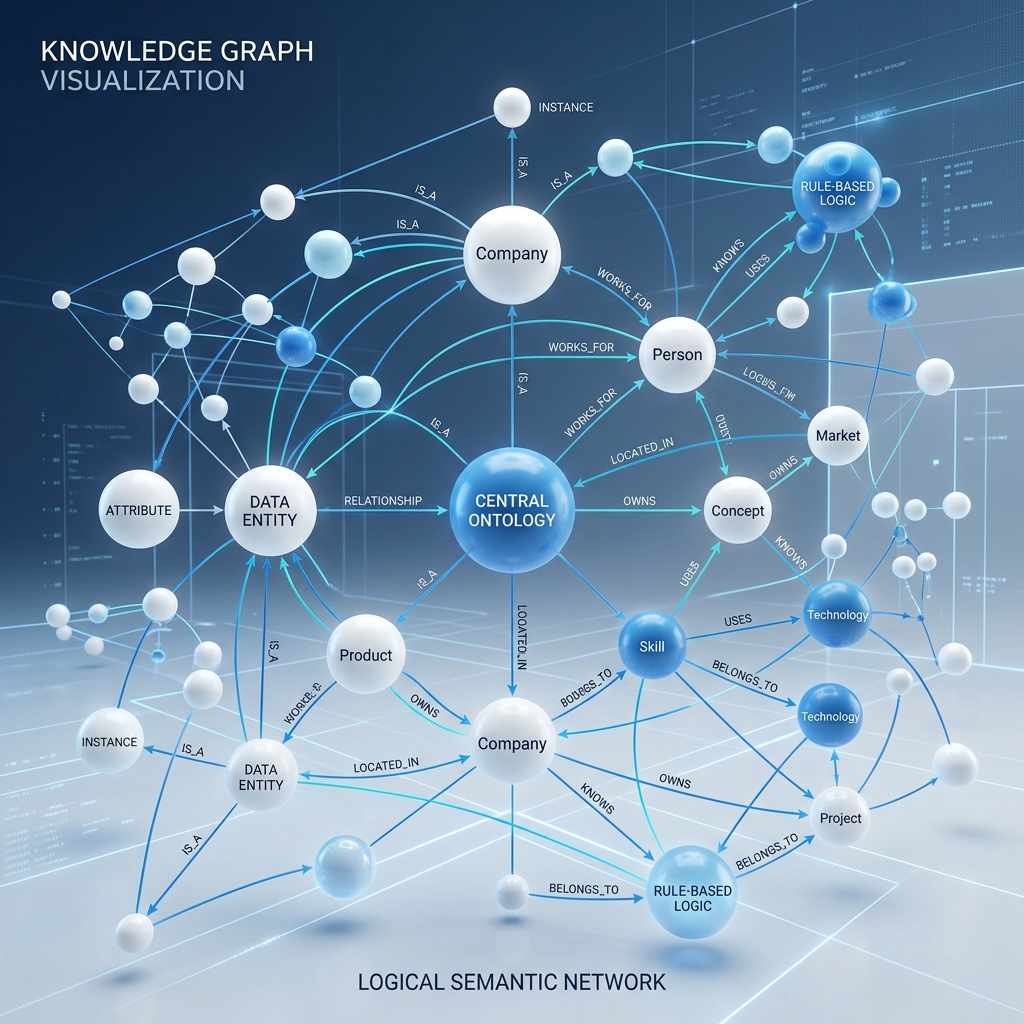
Knowledge Graphs: The Maps of Digital Intelligence
Behind every sophisticated AI answer is a structure known as a Knowledge Graph. This is a massive database that doesn't just store information, but also the relationships between that information. For a business, being correctly placed within a Knowledge Graph is the difference between being a "known authority" and a "random string of text."
The "Triple" Structure: How Knowledge is Formed
Knowledge graphs organize information into simple units called "triples":
- Subject: Your Business Name
- Predicate: Provides
- Object: AI Optimization Services
By connecting billions of these triples, search engines and AI models create a logical map of the world. They use this map to verify facts and ensure that the answers they generate are grounded in reality.
Why AI Models Rely on Graphs
While Large Language Models (LLMs) are great at language, they aren't naturally good at facts. Knowledge graphs provide the "factual grounding" that prevents models from hallucinating. When an AI cites your brand, it's often because it found a verified path in its internal Knowledge Graph that connects your brand to the user's query.
How to Strengthen Your Entity in the Graph
- Structured Data (Schema): Use JSON-LD to explicitly tell the graph who you are and what you do.
- Authority Links: Get cited by high-authority industry databases and news organizations.
- Information Consistency: Ensure your core business data (name, address, services) is identical across the entire web.
Conclusion
Knowledge graphs are the "logical backbone" of the AI era. By ensuring your business is correctly and consistently represented in these digital maps, you provide the factual foundation that AI models need to trust and recommend you.
Related articles



Ready to optimize your AI visibility?
Get your free AI audit score and see how ChatGPT, Claude, and Perplexity currently see your business.
Scan your website free